

Whether you are sipping a dark Irish stout at the pub or staring in awe as the barista hands you a cascading, creamy nitro cold brew, you are experiencing the transformative power of Nitrogen.
But why nitrogen? What makes this gas so fundamentally different from the standard CO2 used in most draft beer and sodas?
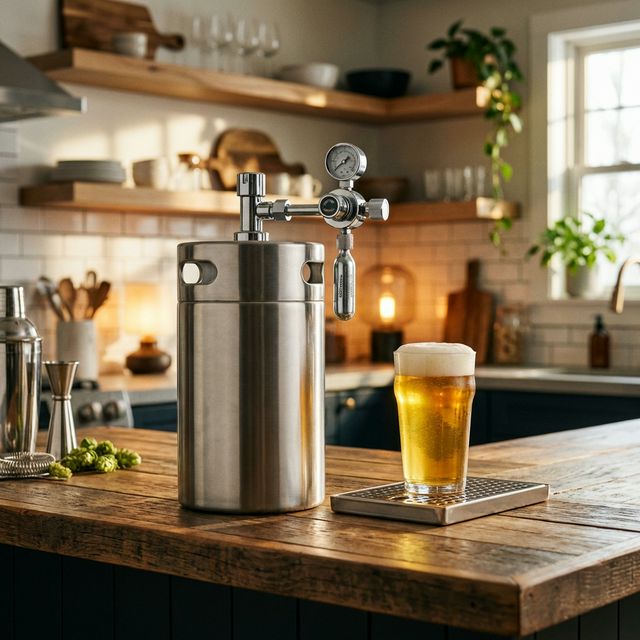
If you are looking to elevate your home draft setup—especially if you just got a Keg Smiths Nitro System—understanding the mechanics of pure N2 (Nitrogen) gas is the key to mastering the "perfect pour."
Here is the science behind why pure nitrogen is the ultimate secret weapon for stouts, porters, and cold brew coffee.
The Problem with CO2
To understand why we need nitrogen, we first need to look at Carbon Dioxide (CO2).
CO2 is highly soluble in liquids. When it dissolves into beer, water, or soda under pressure, it forms carbonic acid. This creates the sharp, biting, acidic "fizz" we expect when we open a can of sparkling water or an IPA.
While this sharp "bite" is perfect for bright, hoppy beers and sodas, it completely ruins the flavor profile of dark, heavy beverages.
- Stouts and Porters: The carbonic acid from high CO2 levels makes these dark beers taste harsh, bitter, and astringent, overpowering the delicate chocolate and roasted coffee notes.
- Cold Brew Coffee: Adding standard CO2 to coffee turns it sour and acidic. It completely masks the smooth, rich flavors that are naturally extracted during the cold steeping process.
The Solution: Pure N2 Nitrogen
Enter Nitrogen. Unlike CO2, nitrogen is almost completely insoluble in liquid. It doesn't want to dissolve unless it is forced to under extremely high pressure. Because it doesn't easily dissolve to create acids, it imparts no flavor whatsoever to the beverage.
When you push a stout or cold brew with a mixture of nitrogen, or 100% pure N2:
- The Flavor Remains Smooth: Without the acidic bite of CO2, the roasted malts in a stout and the earthy chocolate tones of a cold brew take center stage.
- The "Cascade" is Born: Because nitrogen bubbles are so incredibly tiny and insoluble, they do not pop quickly like large CO2 bubbles. Instead, they linger in the liquid, creating a thick, creamy mouthfeel before slowly rising in a mesmerizing "cascade."
The Magic of the Stout Faucet
You cannot just attach a nitrogen tank to a standard beer faucet and expect magic. The secret to the nitro cascade relies on a specialized piece of hardware: the stout faucet.
Inside a stout faucet (like the one included on the Keg Smiths Nitro Draft System) is a tiny metal disc called a Sparkler Plate. This plate is drilled with microscopic holes.

When you pull the tap handle forward, the high-pressure nitrogen gas forces the cold liquid through these tiny restrictions. This massive pressure drop physically "shears" the liquid, tearing the nitrogen gas out of solution and creating millions of tiny micro-bubbles. This is what generates the iconic, thick, marshmallow-like white foam head that rests on top of your glass.
Pure N2 vs. 75/25 "Beer Gas" vs. N2O
When discussing "Nitro", things can get confusing if you don't know the terminology. Here is a breakdown of the three gases used to create that creamy pour:
1. Pure N2 (100% Nitrogen)
This is the gold standard for Nitro Cold Brew Coffee and Nitro Tea. Because coffee requires zero carbonation, you push the entire keg exclusively with a single Pure N2 Cartridge. The result is perfectly smooth coffee with a thick, frothy head and absolute zero acidity.
2. Beer Gas (75% N2 / 25% CO2)
This is the standard for serving draft Stouts and Porters (like Guinness) at a bar. If you used 100% pure nitrogen for a beer, it would taste completely flat. The beer still needs a tiny bit of carbonation for that refreshing tingle on the tongue. By using a blended gas (75% Nitrogen for the cascade and creamy texture, and 25% CO2 to maintain light carbonation), the beer stays perfectly balanced.
3. N2O (Nitrous Oxide)
N2O is commonly used in whipped cream dispensers. Many people use small 8g N2O cartridges for at-home nitro cold brew because they are incredibly cheap and easy to find. While N2O produces an excellent cascade and a thick foam, it is highly soluble and imparts a slightly sweet flavor to the beverage. Pure N2 is universally preferred by coffee purists, while N2O is a fantastic budget-friendly alternative.
The Ultimate At-Home Nitro Experience
Whether you are pushing a fresh batch of cold brew on a Saturday morning or pouring a rich milk stout by the fire, knowing why your gas works completely elevates the experience.
Stop settling for flat coffee and bitter dark beers. By pairing a high-quality stout faucet with Pure N2 Nitrogen, you can replicate the exact texture, mouthfeel, and cascade of your favorite coffee shop or pub directly from your fridge.
Shop the Keg Smiths 8-Pint Nitro Keg System today and start pouring perfectly cascaded perfection.


Leave a comment
This site is protected by hCaptcha and the hCaptcha Privacy Policy and Terms of Service apply.